Project overview
Comfort’s Tết campaign treated the family wardrobe as a fashion runway. The concept connected the brand’s product range with the color, fragrance and dressing rituals of the Vietnamese New Year, giving product selection a more expressive seasonal context.
The brief: make the product range feel relevant to Tết
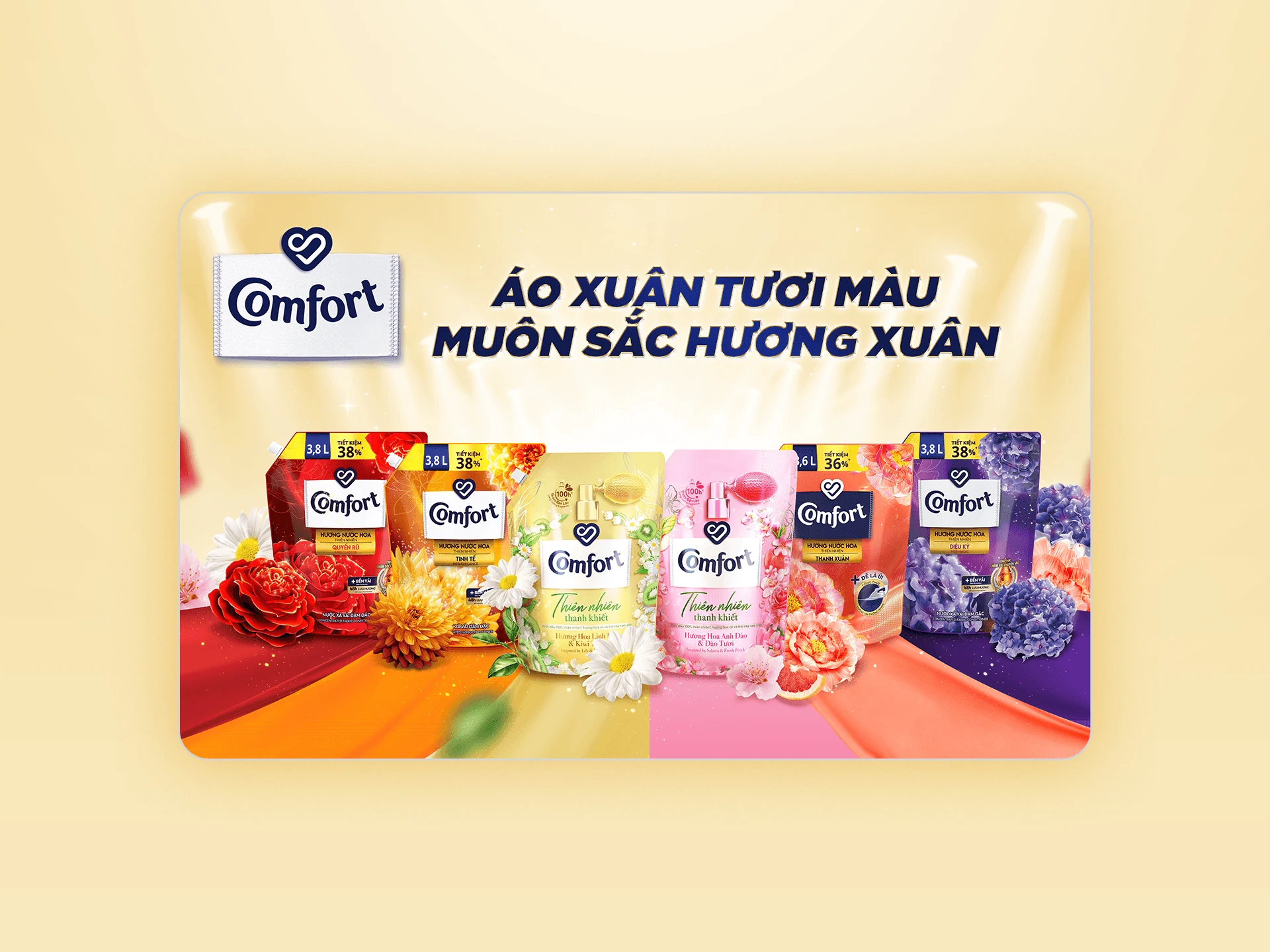
Seasonal communication works best when the product has a clear place in the occasion. For Comfort, the wardrobe became that place: a familiar part of family preparation, personal expression and celebration. “Áo Xuân Tươi Màu — Muôn Sắc Hương Xuân” connected this everyday context with the anticipation of a new year.
The original portfolio describes a concept that introduces Comfort’s SKU range while inspiring product selection for the Tết holiday. The challenge was therefore both practical and emotional: make the range visible and give the audience a reason to imagine it within their own seasonal preparations.
The creative idea: a family wardrobe becomes a runway
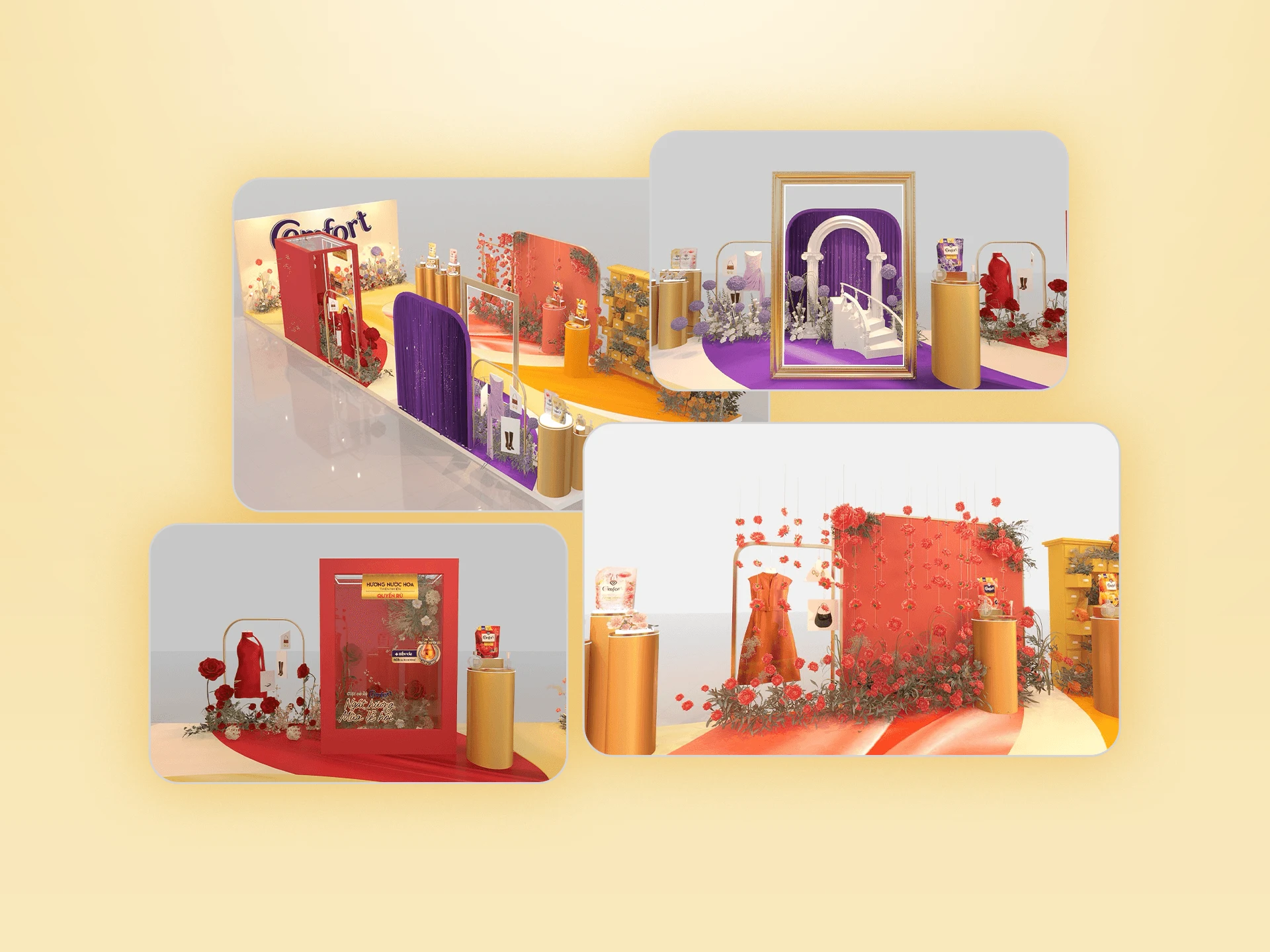
A fashion-runway treatment made clothing the central visual language. This connected color and personal style with the campaign’s fragrance-led message, creating a more engaging setting for a product range than a standalone pack display.
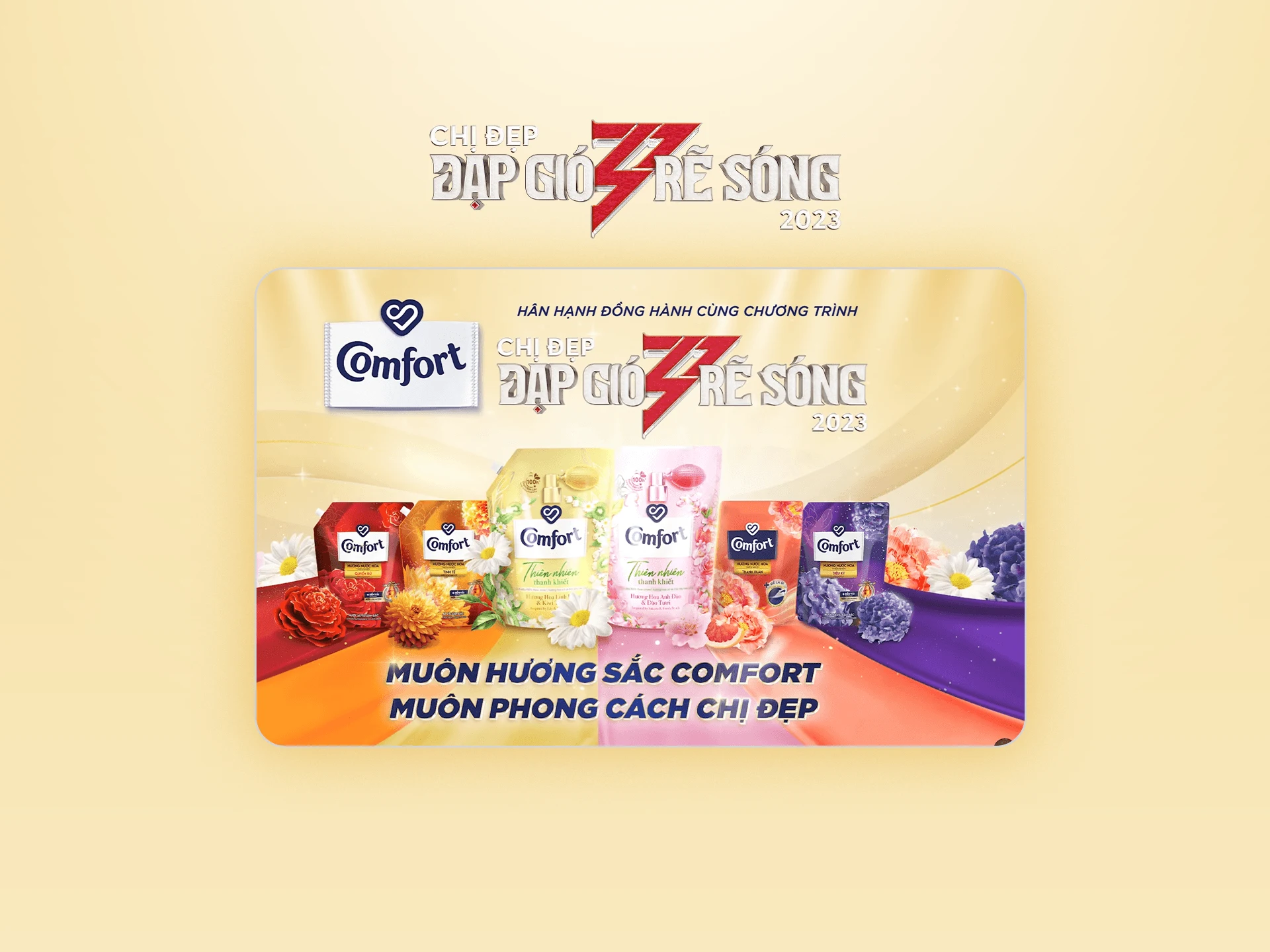
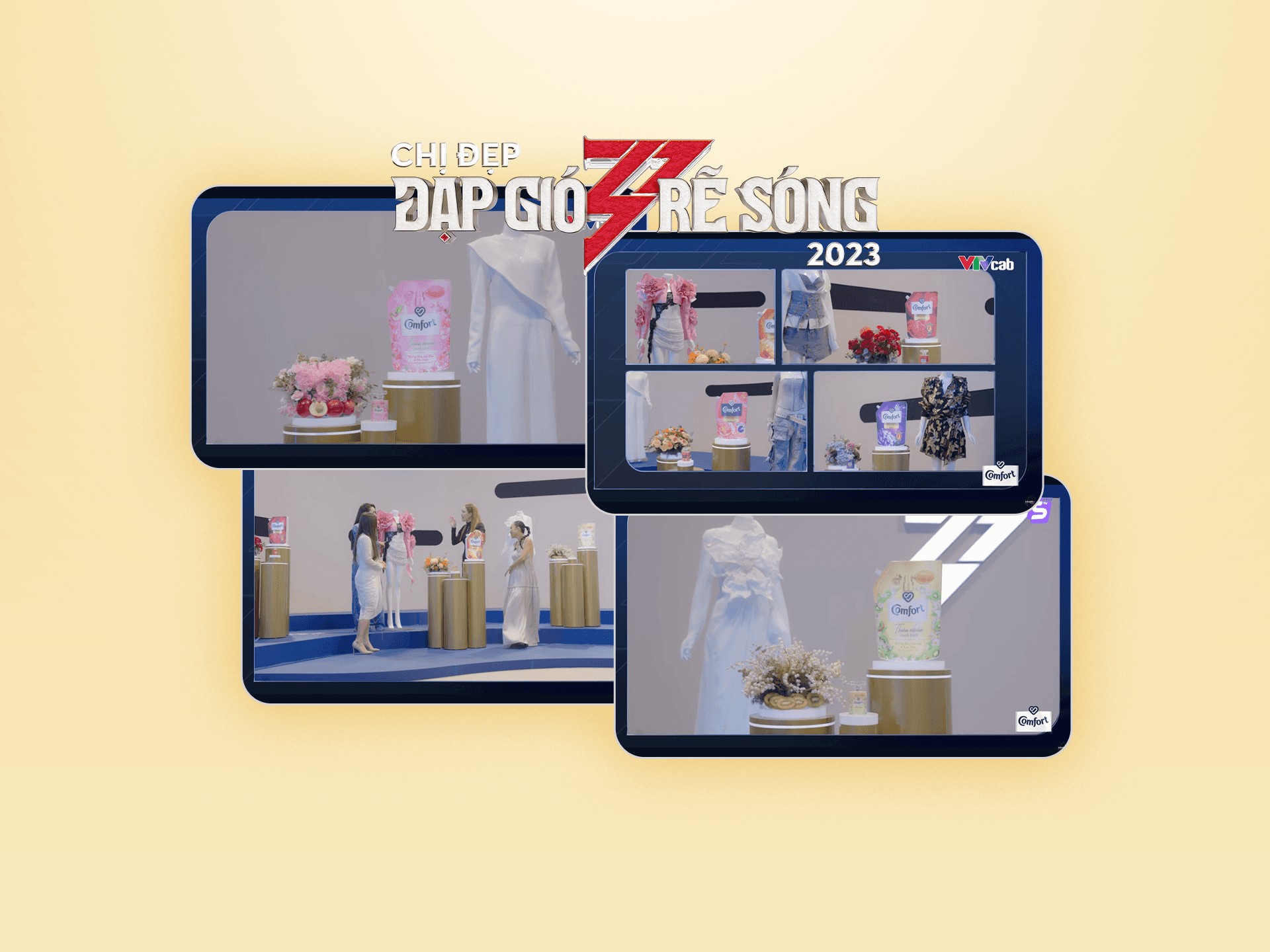
The available visuals show how the idea was carried through the campaign presentation. The assets are reproduced from the Knock Knock archive so viewers can assess the original creative work, rather than a reconstruction of the campaign.
From visual concept to product consideration
The campaign flow introduces the seasonal world, places the product range inside it and connects that world with the audience’s own clothing choices. This gives the communication a recognizable cultural occasion and a concrete product role at the same time.
For another consumer brand, the useful starting point is the behavior already associated with the season. Knock Knock can help develop a campaign platform, key visual direction and connected communication materials that make the product’s role clear. The creative route should be grounded in the audience’s experience of the occasion, with scope and delivery formats agreed for the specific brief.