An AI experience becomes more interesting when it has a useful place in everyday work. This week’s technology brief considers what connected hardware could mean for service design, customer interaction and practical business pilots. The implications below are Knock Knock’s editorial analysis, not claims of measured commercial results.
The selected news, with its scope intact
TechCrunch reports Meta’s Muse Gadgets launch, connecting developer-built hardware with its agent.
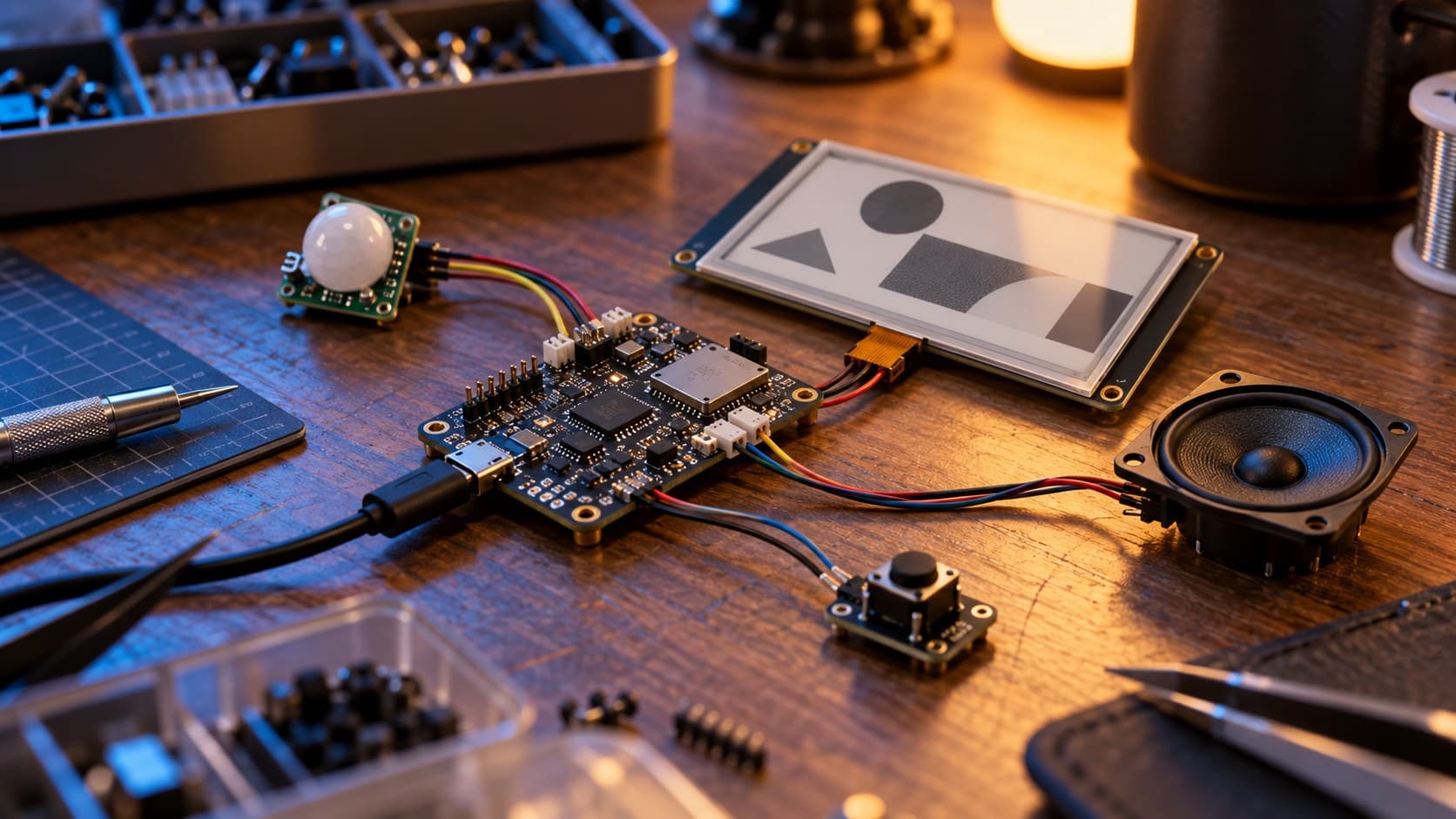
The project’s own website describes open-source device tools for ESP32 and Linux-based hardware, including Raspberry Pi. Developers can connect displays, buttons and sensors. These details establish a prototyping opportunity; they do not establish that a particular commercial workflow is ready for deployment. The official site also describes its code as provided without a warranty.
We selected this story for its relevance to experience design and practical AI workflows. “Weekly technology brief” is an editorial selection, not a claim that TechCrunch has published a verified ranking of reader views.
The business question is the interaction, not the gadget
Start by identifying a moment where a physical interface would make a task easier. A button could offer a deliberate way to request help. A small display could show the status of a process. A clearly bounded voice interaction could reduce the effort of checking information while someone’s hands are occupied. These are possible design directions, not advertised capabilities of a finished business product.
The most useful prototype has one job and one accountable owner. Describe what the user wants to achieve, what information the system needs and what happens if the answer is incomplete. A compelling device can attract attention, but the service behind it determines whether people return. Design that service before expanding the interface.
Make the customer journey legible
A connected AI experience should explain when it is listening, what it is processing and what the person can do next. Clear states are part of brand trust. The interface should distinguish a suggestion from a completed action and give the user an obvious route back to a person.
For a retail or exhibition concept, begin with a small interaction that supports an existing customer need. This might be access to approved product information or a request that the team can review. Keep the message consistent with the brand’s website and sales materials. An interactive installation is more useful when it connects with the wider communication journey.
Pilot a workflow before scaling the experience
Use approved test information and define the boundaries of the pilot. Record response quality, task completion, time saved and the points where staff must intervene. Compare the prototype with the current way of doing the same work. If it adds complexity without improving the experience, change the brief rather than adding more features.
Specify approval steps for consequential actions, response ownership and a practical fallback. These are design decisions the business must make; they should not be assumed from a technology announcement. A pilot review can then assess whether the interaction deserves broader use and which operational requirements remain unresolved.
Connect AI capability with a clear business role
Knock Knock approaches an AI brief through the relationship between brand, digital experience and operations. The starting point is a concrete task, a defined audience and an outcome the team can evaluate. AI workflow discovery can help identify the task; digital experience design can make the interaction clear; creative communication can explain the value to users.
The arrival of another device platform is an opportunity to investigate, not a reason to deploy everywhere. For a business exploring connected AI experiences, a focused prototype and a thoughtful review are more useful than a broad promise of transformation. Bring the workflow and the audience first; choose the interface after the problem is understood.
Sources & further reading
Reviewed on 3 October 2026. Research findings are attributed above; business recommendations and future scenarios are Knock Knock’s editorial analysis.
- TechCrunch — Kirsten Korosec, 2 October 2026
- Muse Gadgets — official project site, device tools and project examples
Editorial imagery is AI-generated and illustrates the topic; it does not document the named research projects.
Explore practical AI business solutions