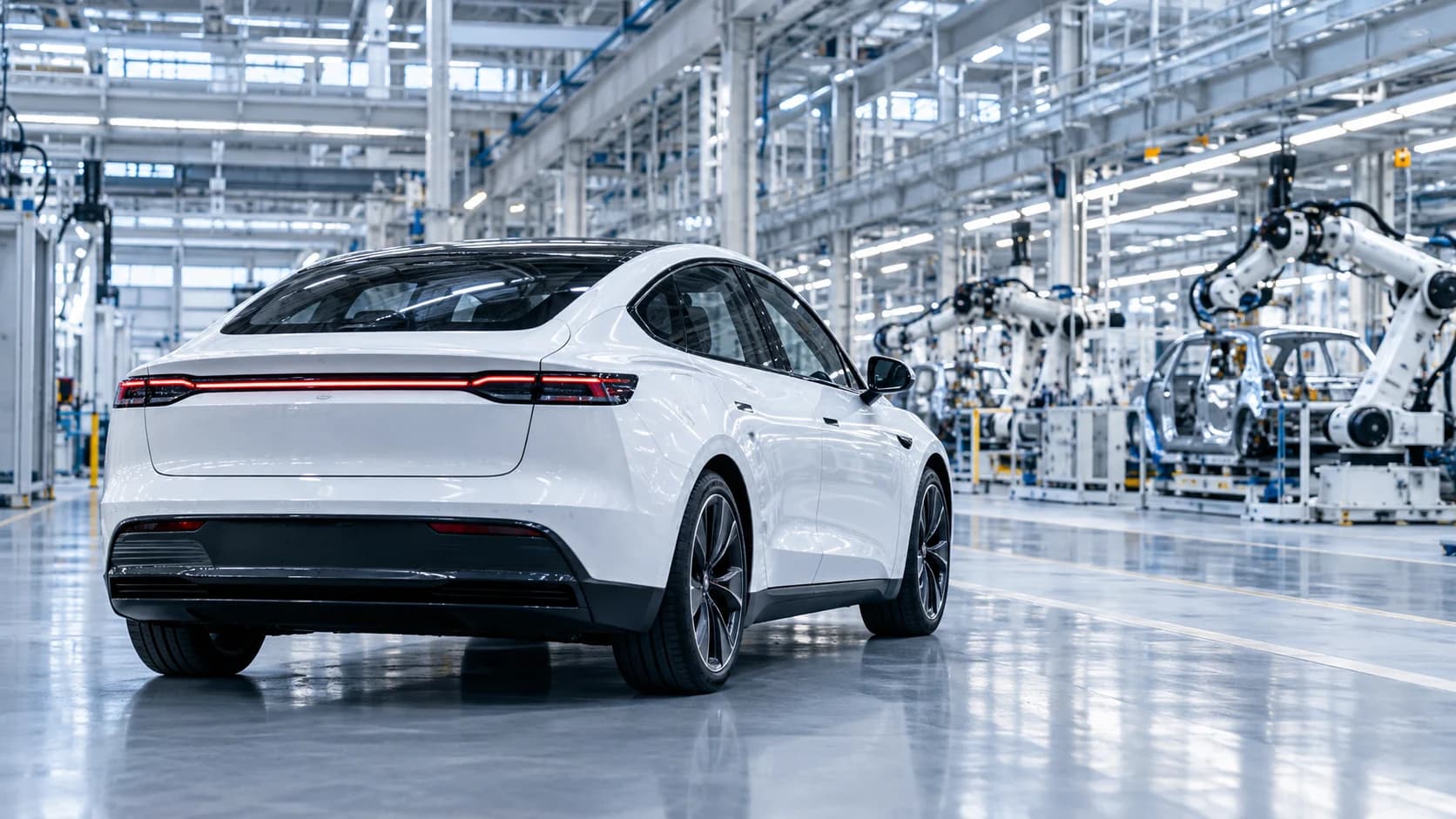
Elon Musk’s Tesla attracts attention for what it might become. Its latest operating release also offers a disciplined way to think about any business investing in a new technology direction.
What Tesla has actually reported
Tesla reported 464,391 vehicles produced and 486,532 delivered in the third quarter of 2026. Its release schedules the financial results for 21 October, after the date of this article. Tesla also states that delivery figures alone should not be treated as an indicator of quarterly financial results.
That distinction matters. An operating count, a financial result and a future product ambition answer different questions. Combining them into one confident headline can hide the information a decision-maker still needs.
Use three layers of evidence
We suggest reviewing technology investment through three separate layers. First, what is already being delivered? Second, what does it cost to deliver reliably? Third, what future capabilities are being developed, and which assumptions must hold before they contribute to the business? This is an editorial planning framework, not an assessment of Tesla’s share price.
An agency introducing AI production can use the same discipline. Count completed assets, then measure review time, revisions and client acceptance. Record experiments separately from services that can already be quoted and delivered. More output is useful only when quality and operating economics support it.
Translate ambition into a credible commercial offer
A Vietnamese SME does not need the scale of Tesla to apply this lesson. Before launching an AI-enabled service, define a repeatable unit of work and an acceptance standard. Include staff supervision, software cost and correction time in the delivery model. Compare the result with the current process.
Knock Knock’s approach brings the commercial promise and the operating reality into the same brief. Communicate what the customer receives now, explain the scope of any pilot and keep future possibilities clearly labelled. A persuasive story should make the evidence easier to understand. It should also leave room for the next report to change the picture.
Sources & further reading
Reviewed on 9 October 2026. Research findings are attributed above; business recommendations and future scenarios are Knock Knock’s editorial analysis.
- Tesla — Q3 2026 production, deliveries and deployments
- Tesla — We, Robot: autonomy and robotics vision
Editorial imagery is AI-generated and illustrates the topic; it does not document the named research projects.
Explore practical AI business solutions