
A modern SME website should help a visitor understand the business quickly, trust it, find the right solution and take a clear next step.
Start with business journeys, not pages.
Visitors arrive with different intentions: evaluate credibility, compare services, find proof, request a quote or understand whether the business fits their market.
Information architecture should map these journeys before visual design begins.

Conversion needs clarity.
Strong headings, focused service descriptions, credible case studies, responsive layouts and visible calls to action reduce decision friction.
A polished website should also load quickly and work consistently across mobile, tablet and desktop.
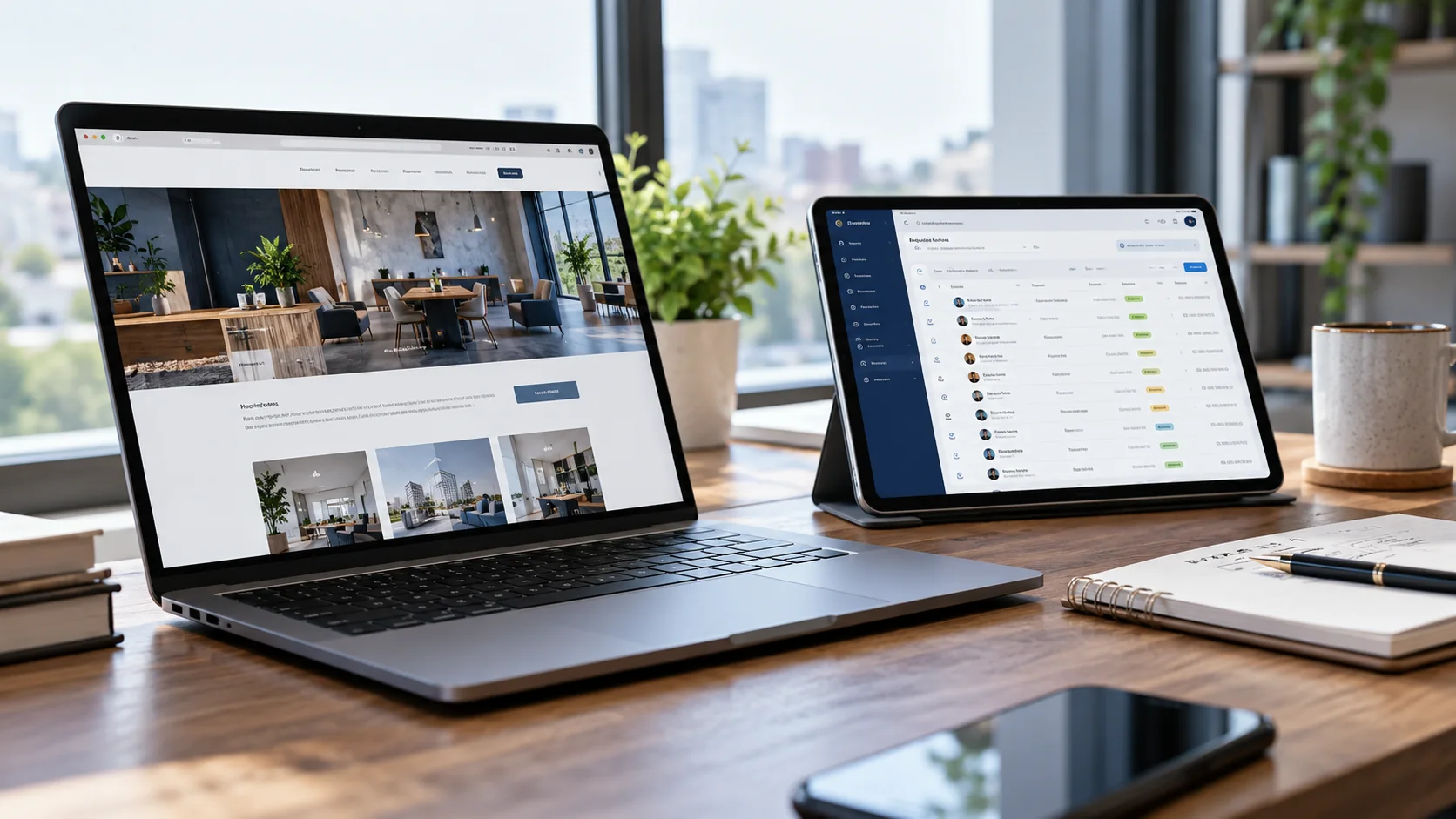
Treat the website as an operating asset.
SEO, analytics, lead capture, CRM connections and reusable content structures make the website more valuable over time.
The strongest websites are not finished at launch; they are systems that can be tested, measured and improved.
Build the site around important customer decisions
Begin with the decisions customers need to make rather than a long list of pages. A visitor may need to confirm that the company serves their industry, compare service options or understand how a project starts. Each important page should answer one of those needs and make the next action clear.
For a service business, a useful structure includes concise service summaries, relevant examples and an explanation of the working process. Put detailed information where interested visitors can explore it without forcing everyone through a wall of text. Tabs and accordions can help when their labels describe real customer questions and their contents remain easy to access on mobile.
Treat mobile usability as part of credibility
Review the site on a small screen using an ordinary customer journey: open the menu, find a service, read an example and submit an enquiry. Check that text is readable, images fit their containers and buttons are easy to use. A visually impressive desktop design still needs a reliable mobile experience to support a professional first impression.
Give photography and media a defined role. Optimize file sizes, reserve image space to limit layout movement and write descriptive alternative text. Decorative effects should support the content rather than block it. Test key forms with realistic details, including incomplete submissions, so that error messages help the visitor finish instead of leaving them unsure whether anything happened.
Create a content system that supports search
Assign a clear topic and purpose to each page. Use descriptive page titles, a useful introduction and headings that organize the answer. Link related services, case studies and articles when they help the reader continue the same task. Avoid repeating similar pages solely to target minor keyword variations without adding useful information.
For an SME, a manageable publishing routine is often more valuable than launching dozens of unfinished pages. Keep service information accurate, update examples and add articles that answer genuine sales questions. Search visibility depends on many factors, and no layout guarantees rankings, but clear, substantive content gives both people and search engines a better understanding of the business.
Measure the website as a business tool
Agree on a small group of outcomes such as qualified enquiries, completed contact forms and engagement with relevant case studies. Check how those outcomes are recorded before a campaign begins. A dashboard full of visits and impressions may hide whether the site is helping the company reach the right customers.
Schedule maintenance alongside content work. Assign ownership for broken links, outdated information, accessibility checks and form delivery. Review customer feedback with the sales team so that the website improves in response to real questions. A modern business website works best as an actively maintained part of the customer experience, with clear responsibility for both its presentation and its practical performance.